

What to Send When a Prospect No-Shows Your Sales Call
You did the prep for the sales call. Now it's 2:05, you're staring at an empty video link with the coffee going cold... and the prospect never showed.
Ten minutes past, you start telling yourself a story about it. They weren't serious. They were never going to buy. You got played.
Most reps let a prospect's no-show end the deal right there. That's an expensive mistake!
Ten minutes of silence cost you one sales call. The deal's still sitting where it was, waiting on a new time, and two short messages are how you get it.
Key Takeaways
- A no-show is a missed calendar event. Read it as information about their week and keep the buyer in your pipeline.
- Send the first message inside fifteen minutes, while you are still fresh in their mind and their day is still recoverable.
- Two touches rebook most of them: one short, warm message the same day, one that offers two specific times the next day.
- Never make them apologize. A message that hands out guilt gets ignored, because answering it costs them something.
- Write the rebook sequence down before you need it. Reps who decide what to send in the moment send nothing, because the moment stings.
Why your prospect didn't show for the sales call
I have missed appointments I genuinely wanted to be at. You probably have too.
A kid got sick. A customer called with an emergency at 1:58 for a 2:00 call. The calendar invite went to the email address they check twice a month. They wrote it down wrong. They got pulled into a meeting by somebody who outranks them and had no way to tell you.
None of those are rejection. Every one of them looks exactly like rejection from your side of the screen.
And that is the trap, because the story you tell yourself in those ten minutes decides whether you send anything at all. Decide it was disrespect and you will write a message with an edge on it, or you will write nothing and quietly move them to the dead pile. Decide it was a Tuesday and you will write something a human being can answer.
The fifteen-minute rule
Speed matters here more than almost anywhere else in your follow-up.
Fifteen minutes out, they might still be looking at the missed notification with their stomach dropping. Their afternoon is still open where your call used to be. You are the most recent thing on their calendar.
Two days later, you are an awkward email they have to work up to answering. The apology they owe you has been sitting there collecting interest, and now the easiest move for them is to never respond at all.
So the first message goes out while you are still sitting at the desk. Not tomorrow, when you feel less annoyed about it. Right then, before the annoyance has anywhere to go.
Touch one: what to say the same day
Short. Warm. No guilt in it anywhere.
Something like: "Hey Mike, looks like we got our wires crossed on 2:00. Totally happens. Want me to grab another spot on your calendar this week?"
Read what that does. It gives them an exit that doesn't cost them anything. Wires crossed is a shared problem, not their failure. Totally happens tells them you are not keeping score. And it ends on a question they can answer with one word while they are walking to their truck.
Now read what most reps send instead. "I waited 20 minutes on our call today." That is a true sentence and it is a bill, and people do not pay bills from salespeople they barely know. Every message that makes them apologize first makes answering harder, and hard is the only thing standing between you and a rebooked call.
Text beats email on this one, every time, if you have the number. The whole point is speed and a low bar to answer, and nobody answers email in the parking lot.
Touch two: the next day, with times in it
If the same-day message gets nothing, the next one does the work for them.
"Mike, I've got 9:15 tomorrow or 3:30 Thursday open. Either of those work? If it's easier, tell me a time and I'll make it work."
Two specific times, and a door left open for a third. That is the difference between a message that requires a decision and a message that requires a project. "Let me know what works for you" sounds polite, and it hands them homework. Now they have to open their calendar, think about their week, and compose a reply. Two times and a yes takes four seconds.
And if they pick neither and go quiet, you have learned something real: this week is not the week. That is a scheduling fact you can work with, and it beats the story you were about to make up.
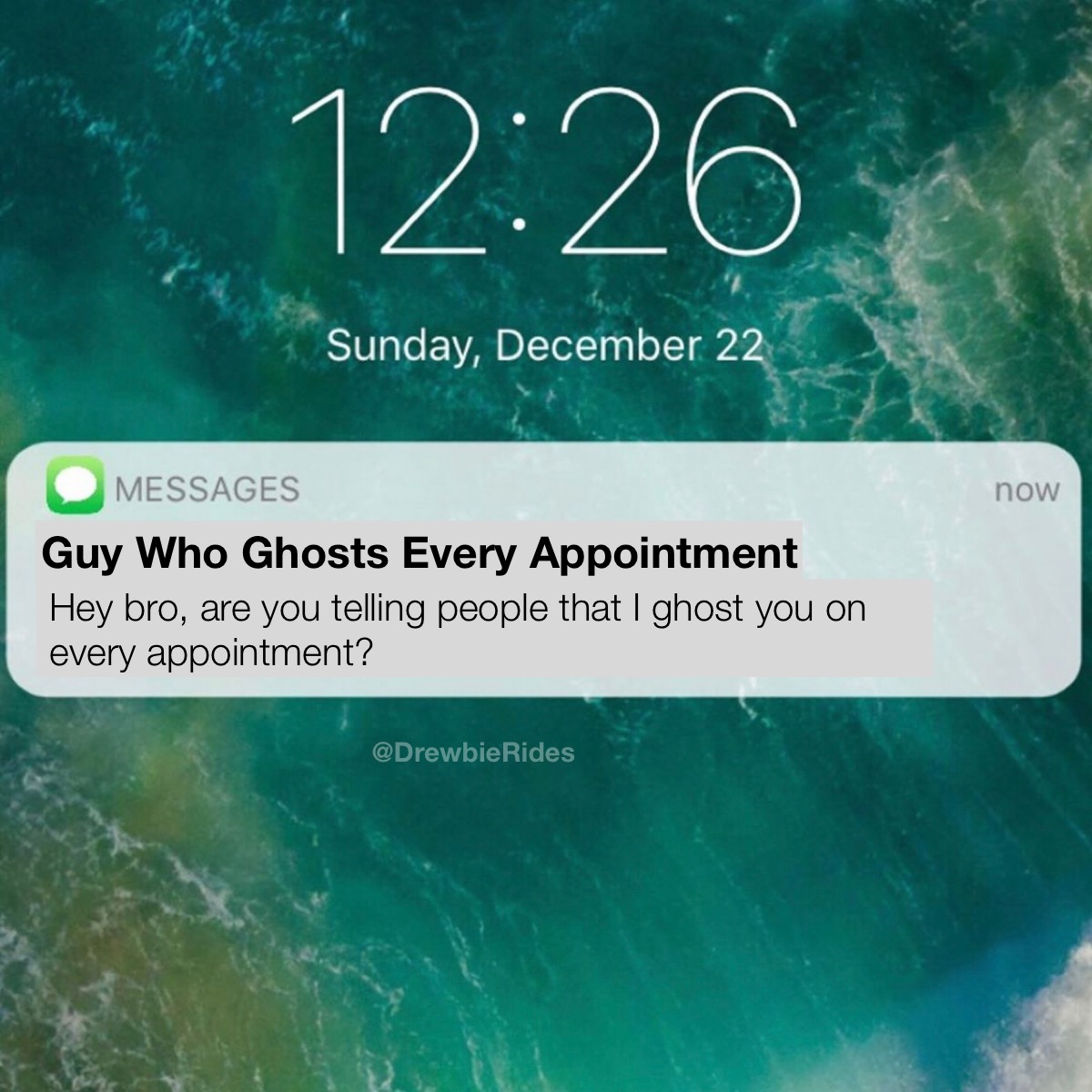
One no-show is a Tuesday. Three is a pattern.
I'll save you some pain on this one. Everything above assumes the miss was a one-off, and most of them are. Three no-shows from the same person is data.
Someone who books, misses, rebooks, misses again, and keeps thanking you for understanding is telling you where you sit on their list, in the only language that doesn't require them to say it out loud. Believe them the second time rather than the sixth.
Then spend accordingly. Put them on the long list and keep the touches light. Your good hours belong to the people whose calendar actually has room for you.
The reps who burn out on no-shows are almost always the ones giving their best energy to the three people least likely to buy, and calling it persistence.
Where the rebook sequence really comes from
Everything above is C.A.L.L.S. running on a missed appointment. You confirm the reason you're reaching out, ask, listen, lead, and set the next step. On a no-show, that next step is a new time on the calendar instead of a close.
The messages themselves are ordinary follow-up texts, and if you want more of them to work from, the text message templates cover the rest of the sequence. Watch out for the reschedule-over-email trap while you're at it. "Just send me some times over email" is the same brush-off as "just email me" wearing a different hat, and it deserves the same answer: agree, send it, and keep the phone number in play.
Then the rebooked call has to actually connect, which is its own skill. Getting them to pick up is where a lot of rebooks die. If you'd rather call than text, grab the phone-first no-show script from the sales scripts and follow-up cadence library.
Write it down before you need it
The reason most reps handle no-shows badly has nothing to do with the words. It is that they are deciding what to send at the exact moment they feel worst about it.
Anybody can write a warm message on a good day. Try writing one ten minutes after your third no-show of the week, right after a deal fell through, with a manager asking about your numbers. That is when the edge creeps in. That is when you skip the message entirely and tell yourself you'll get to it.
So decide now, while nothing is on fire. Two messages, written out, sitting in your notes app. Fifteen minutes and next day. When it happens you are copying, changing the name and the times, and moving on with your afternoon.
The messages are ordinary. The written sequence is what keeps working on the days your motivation doesn't, and that is the whole reason a follow-up system exists. If you want the full version, the timing and the sequences and the tracking underneath it, that's what I built Closing the Loop for. It's $297, and it installs the process so you stop deciding follow-up one lead at a time.
Either way, send the message. The appointment got missed. The buyer is still sitting right there.
Call the damn leads.


Leave a comment