

Sales Follow-Up Text Messages: 9 Templates and When to Send Them
A good sales follow-up text message fits on a lock screen and asks one question they can answer with a thumb. Send the first one within five minutes of a new lead, then keep texting for about two weeks before you slow down.
When a lead first comes in, I'm ok calling twice. Sometimes it goes straight to voicemail because their phone's on Do Not Disturb, so usually I send a quick text after those two calls.
Triple dialing someone multiple times a day is too much for me, so I won't do it to anyone else. A text keeps you in front of them without crowding them... and the 9 templates and the cadence below are the exact words I'd use.
Key Takeaways
- Send your first text within five minutes of a lead's action, while they're still thinking about the problem you solve.
- Call twice, then text. A short text after two missed calls is how you stay on a new lead's radar without triple dialing them.
- Keep every text under 160 characters with one easy question, and give them an out like "No rush on this."
- Run five texts over about two weeks, then move quiet leads to a slower nurture and keep them in your CRM.
- Get express written consent first, include "Reply STOP to unsubscribe," and only text between 8 AM and 9 PM their time.
Table of Contents
- Why Texting Is the Missing Link in Your Sales Funnel
- The Anatomy of a High-Converting Sales Follow Up Text Message
- The 5-Step Sales Follow Up Text Message Cadence: The "Don't Quit" Sequence
- 9 Ready-to-Use Sales Follow Up Text Message Templates for 2026
- How to Measure and A/B Test Your SMS Follow-Up Performance
- Frequently Asked Questions About Sales Follow Up Text Messages
Why Texting Is the Missing Link in Your Sales Funnel
A new lead stays warm for about as long as it takes them to switch tabs. They just filled out the form or grabbed the guide, and right now they're thinking about the problem you solve.
A text lands on the phone that's already in their hand. That's why it's my first move after the calls.

Persistence is the other half, and it's where most reps fold. "I don't want to bother them" is on the list of excuses I hear over and over, and the translation is simple: you're more worried about your comfort than their problem.
Texting takes a lot of the sting out of it. Two short lines are easier to send than a third call, and they're easier to answer than an email they have to sit down and read.
Here's how I split the channels. Text carries most of the follow-up, the check-ins and the reminders. The phone is for real conversations and the close, when tone matters.
Email is for anything they need to read on a bigger screen or keep, like a proposal or a contract. And if the email side has already gone quiet on you, here's what I send when the email gets ignored.
The Anatomy of a High-Converting Sales Follow Up Text Message
Most sales texts fail because they read like an email someone squeezed onto a phone. Keep yours under 160 characters, or two short sentences.
If they have to scroll, you've lost them.
Ask ONE question per text, and make it one they can answer in about two seconds. "Are you the right person to talk to about this?" works. So does "Want me to send over that case study?"
Make it personal by naming the thing they did. If they grabbed the pricing guide, say so. If they told you about a problem on the first call, bring it back up.
"Saw you grabbed the pricing sheet. Want me to walk you through the team plan?" tells them a real person's paying attention.
B2B buyers usually want it direct, with emojis saved for after you've built some rapport. In retail, auto or home services, a friendly tone and the occasional emoji fit right in.
Either way, read how they text you back and match it.

And always give them what I call the easy out. "No rush on this" or "If the timing's off, I totally get it" lets them say not now without feeling guilty.
Desperation pushes buyers away, and an easy out gets you replies.
Consent and the TCPA: Read This Before You Text Anyone
Before you send a single text, get permission. In the U.S., the Telephone Consumer Protection Act (TCPA) requires prior express written consent before you send automated or marketing texts.
That means the lead opted in, usually with a checkbox on your web form or at checkout, and you logged when it happened in your CRM. Assuming you've got consent is how people end up in a lawsuit.
Every text needs a clear way out. "Reply STOP to unsubscribe" is the standard, and it has to work the second they send it. Keep texting after a STOP and the fines stack up per message.
Watch the clock too: nothing before 8 AM or after 9 PM in their time zone. Inside that window, test mid-morning against late afternoon and let your own replies tell you which one wins.
Some industries carry extra rules. Healthcare has HIPAA, which generally keeps protected health info out of plain SMS, and financial services answer to FINRA on archiving and supervision. Real estate teams need to check Do Not Call rules, which can cover texts too.
If you're in a regulated industry, talk to your legal team before you launch anything. Every template here assumes you've already got consent.
The 5-Step Sales Follow Up Text Message Cadence: The "Don't Quit" Sequence
Most follow-up advice stops at "send a text after the call." That's step one. This cadence runs about two weeks, and every message has its own job, so you're never sending the same text twice.
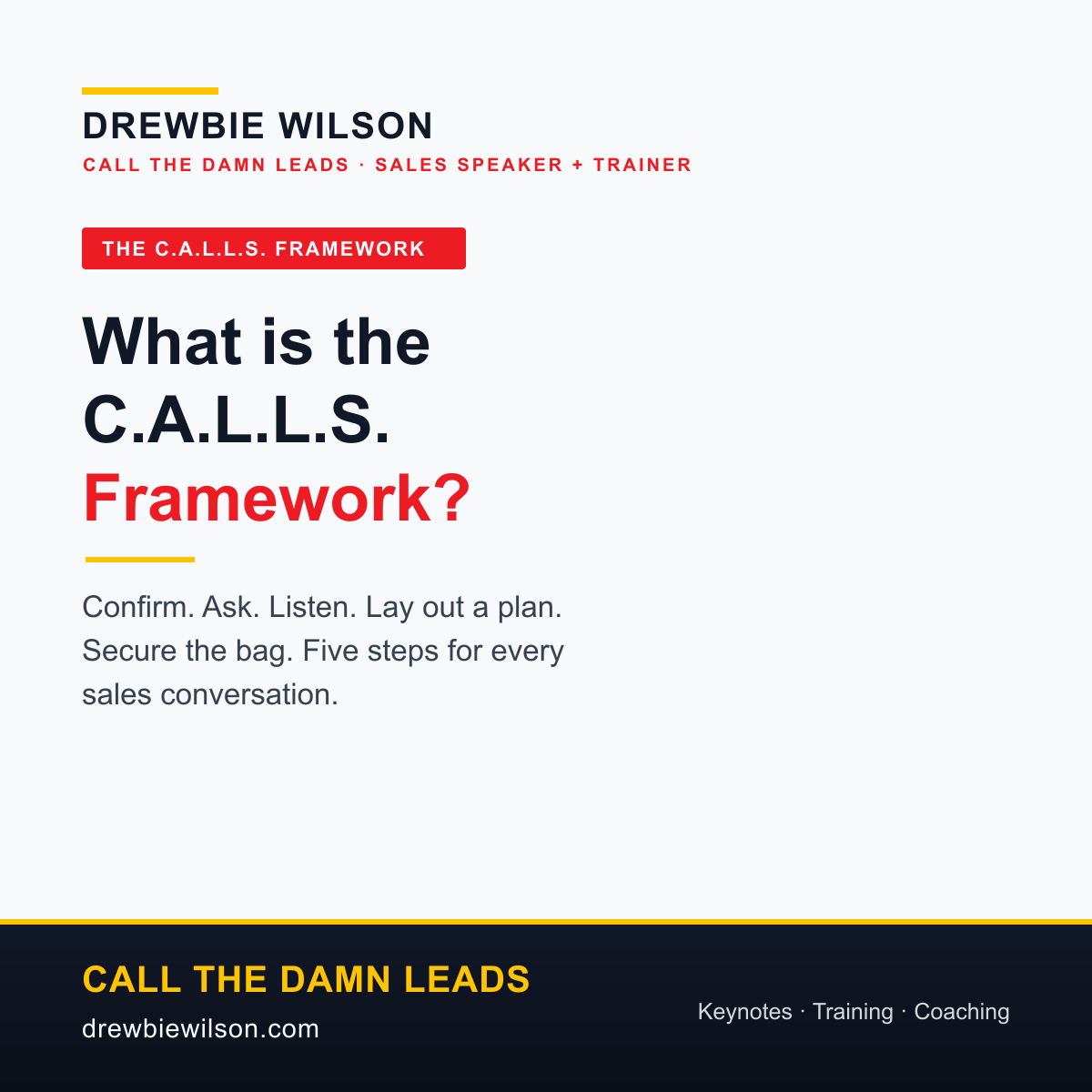
It's built on the C.A.L.L.S. framework from my book, Call The Damn Leads: Confirm, Ask, Listen, Lay out a plan, Secure the bag. The whole idea is that you never quit after one text.
Step 1: The Instant Trigger, within five minutes. She just filled out the form or asked for the demo, and she's thinking about the problem right now. Name what she did and ask one qualifying question.
"Hi Sarah, it's Mike from Call The Damn Leads. Saw you just requested the pricing guide. Quick question: are you looking for a solution for yourself or your team?"
That tells her a real person's on the other end, and it gives her something easy to answer. If she replies, you're in a conversation!
Step 2: The Voicemail Follow-Up, about an hour after the voicemail. This is the call-twice-then-text move. If they never pick up at all, start with getting leads to answer the phone.
Plenty of people won't call you back because calling back feels like a commitment. A text takes that pressure off.
"Hi Sarah, just left you a quick voicemail. No need to call back right now. Just wanted to make sure you saw it. Reply here if a text is easier."
Step 3: The Value-Add Nudge, day two. The urgency's gone and she's back in her normal week. Hand her something useful.
"Hey Sarah, thinking about your comment on lead response times. I've got a quick case study from a real estate team that fixed theirs. Mind if I send it over?"
It proves you listened and it asks for nothing. If she says yes, you've got permission to keep talking, and if she says nothing, you still showed up as the helpful one.
Step 4: Break the Silence, day five. Usually the quiet is just life getting in the way. Come back with zero guilt in it.
"Hi Sarah, circling back. No pressure if timing is off. Just wanted to see if you had any questions on the lead management platform."
"No pressure if timing is off" gives her the easy out, and asking whether she has questions keeps the door open.
Step 5: The Final Attempt, somewhere between day 10 and day 14. This one closes the file, and it tends to shake loose the people who meant to answer and kept putting it off.
"Hey Sarah, I'm going to close out your file for now unless you'd like to keep the conversation going. If anything changes down the road, feel free to reply here anytime."
Still nothing? Move her to a long-term nurture and check back in a few months. Like I've said about 100/10/2, the beautiful part is a system that keeps the follow-up going after a serious conversation, so it can convert on the 6 to 9 month timeline.
If You Automate Any of This
If you automate the reminders, keep a human on the replies. Every sequence needs exits: a booked meeting, a "not interested" and a STOP.
Say a lead texts back "call me Tuesday at 2" and gets three more automated nudges. You just told them you don't listen, so the second someone replies, the robot steps aside and you pick up the phone.
9 Ready-to-Use Sales Follow Up Text Message Templates for 2026
Copy these, swap in your details and keep the shape. Each one's short and asks one thing.
Template 1: After a webinar or demo. "Hi Sarah, great to have you on the lead conversion webinar today. What was your biggest takeaway?"
Her answer tells you exactly what to talk about next.
Template 2: The silent prospect. "Hi Sarah, checking in. Is this a bad time, or is the solution not the right fit? Happy to point you elsewhere if we're not the match."
It's disarming because you're admitting you might not be for her. People will reply just to set the record straight.
Template 3: After a sales appointment or showroom visit. "Thanks for stopping by today, Sarah. I'm pulling together those options we discussed. Expect them by 10 AM tomorrow."
Then hit 10 AM. Doing what you said you'd do builds trust faster than charm ever will.
Template 4: Appointment confirmation. "Reminder: We're set for Tuesday at 2 PM. Here's the Zoom link: [link]. Reply CONFIRM so I know you're good."
No confirmation by that morning? Send one more nudge. And if they still don't show, here's what I send after a no-show.
Template 5: Sharing something useful. "Hey Sarah, saw you were interested in reducing lead response time. Here's a quick 2-minute read on how a mortgage broker sped theirs up: [link]."
Only send it when it ties to something she told you. A random blog link gets ignored.
Template 6: The upsell or cross-sell. "Hi Sarah, hope you're loving the platform. We just released an automated texting feature that our power users are raving about. Want a quick look?"
Save this one for happy customers. Upsell a cold lead by text and you'll watch your opt-outs climb.
Template 7: Relationship building, no pitch. "Congrats on the promotion, Sarah. Saw the news on LinkedIn. Well deserved."
There's zero selling in it, and people remember who showed up when there was nothing to gain. Only send it when you mean it.
Template 8: The dormant lead. "Hi Sarah, it's been a while. We've made some updates to the platform since we last spoke. Worth a 5-minute look?"
Sometimes an old lead just needs a reason, and a real update or a pricing change counts. Leave out the apology, too: "Sorry it's been so long" starts the whole thing on your guilt.
Template 9: The video follow-up (MMS). "Hi Sarah, here's a quick video walkthrough of the feature I mentioned. Let me know what you think."
Attach a short screen recording or a photo of the product. It breaks up a thread full of plain text, and it fits auto and retail best, where seeing the thing matters.
How to Measure and A/B Test Your SMS Follow-Up Performance
Track replies on your texts: how many turn into a reply or a booked meeting. That's the number that pays you.
Test one thing at a time. Send half your texts mid-morning and half late afternoon, and see which batch gets more replies over two weeks.
Then try a one-line version against a three-line version of the same text. Your buyers will tell you which one they like.
Watch reply rate, clicks on any links, opt-outs and meetings booked per hundred texts. If opt-outs start climbing, your cadence is too pushy or your words sound too salesy, so pull back.
And use your CRM's merge fields to mention their last conversation. A text that names what they did beats a generic blast every time.
Now pick the three templates that match the leads you see most and save them in your phone or your CRM today, so they're ready before the next form fill comes in.
Then run all five steps on every new lead this week, right through to the last text. Most of the work is refusing to quit after one!
Call the damn leads... and when they don't pick up, text them.
Frequently Asked Questions About Sales Follow Up Text Messages
The cadence here is built on the same thinking as the sales books I recommend for 2026.
We break the whole follow-up cadence down inside our follow-up training.


Leave a comment