

What to Say When a Lead Says "Not Interested"
You dial. They pick up. You get half a sentence out, and they cut you off cold.
"Not interested."
Five seconds. Call over. Your stomach drops, and the next number on the list suddenly looks heavier than it did ten seconds ago.
Every rep who's ever called the damn leads knows that moment. The ones who keep a pipeline learn what to do with it. The ones who freeze start dodging the phone by lunch because they can't shake it.
Key Takeaways
- "Not interested" in the first five seconds is usually a reflex, not a researched verdict on your offer.
- Agree with the energy, then earn one more beat of conversation before you hang up.
- Ask one clean clarifying question. Pressure turns a brush-off into a locked door.
- Log the attempt, move to the next dial, and let your daily standard carry the emotion.
- Circle back later with a real reason to reconnect. Today's no is not a forever no.
What "not interested" usually means on a live call
Sometimes they mean it. They already bought. They already hired someone. They're mid-crisis and you're noise.
A lot of the time, though, they mean "I don't want to be sold to by a stranger right now." That's a fair reaction. Your number just lit up their phone. They have no context, no trust, and about two seconds of patience.
Treat the line as an early objection in the same family as what to say when a lead says just email me. Soft exits and hard brush-offs both try to end the call before a real conversation starts. Your job is to find out which kind you're dealing with without arguing.
Don't argue with the brush-off
The worst move is to fight the words. "But you haven't even heard what I do" makes you the problem. So does a speech about why they should be interested.
Match the moment instead. Short. Human. No guilt trip.
Something in this shape:
"Totally fair. Real quick before I let you go… is that a not-interested-ever, or a not-interested-in-being-pitched-right-now?"
That one question does three jobs. It respects the boundary. It gives them an easy out if they truly want off. And it opens a crack if the real issue was timing, tone, or surprise.
If they say forever, thank them and hang up clean. Protect the brand. You'll call someone else in the next two minutes.
If they say "right now," you've just bought a second of honesty. Use it.
The second question that keeps the door cracked
When they give you a little room, don't dump your pitch. Ask what would make a call like this worth their time later.
"Got it. When you are open to it, what would actually be useful… a short idea on follow-up, or help getting more conversations booked?"
Now you're listening. Their answer tells you whether this was a dead end or a badly timed approach. Write that note down. Future-you will need it.
Same spirit as handling the "I need to think about it" objection. You're hunting the real objection under the first words they reached for, not forcing a close in the first five seconds.
Put the brush-off inside a system
One ugly call will wreck your afternoon if you let it set your scoreboard. That's why the day needs a standard bigger than any single answer.
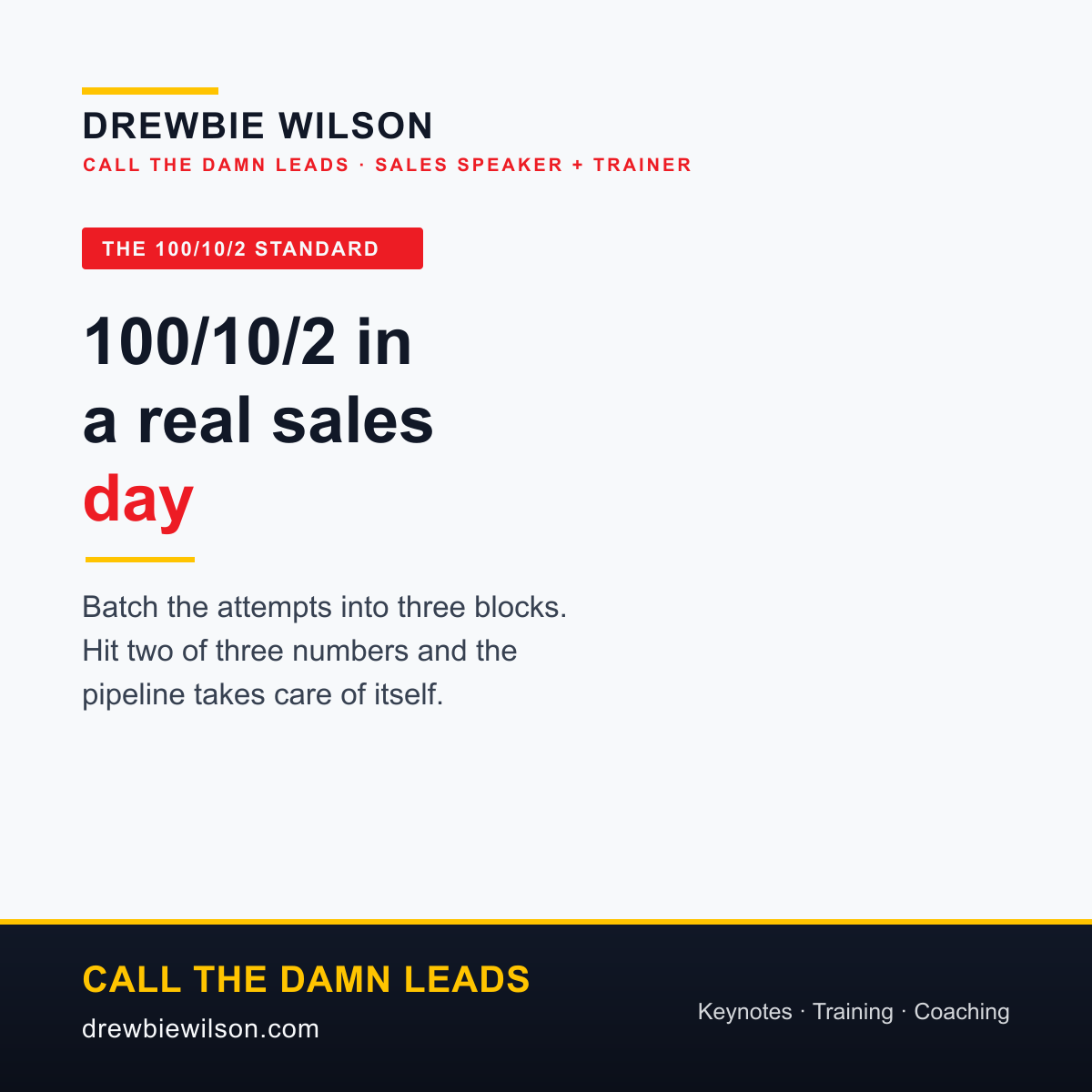
Hit your attempts. Hit your serious conversations. Hit your closes when they are there. Miss one of the three and you can still have a strong day. Miss all three because one "not interested" sent you to email and busywork, and the brush-off won twice.
When you do circle back, use the C.A.L.L.S. sales framework: confirm where you left things, ask a real question, listen, lay out a simple plan, and only then ask for the next step. A text three days later that says "just checking in" is lazy. A text that references the thing they said they might care about later is a second chance earned.
If you want the wider map of how specific objections fit together, start with how to overcome objections and close more deals, then come back to this page when the first five seconds go sideways.
Build the skill on purpose
Brush-offs feel personal because they land in your ear in real time. They're still a skill issue. The reps who get past them practice the first thirty seconds the same way they practice their offer.
That's what Objection Proof is for: a focused way to get fluent on the lines that show up on live calls, including the ones that arrive before you finish your name. Quote the price only when you are ready to buy it for yourself or your team: $37.
Until then, keep the play simple. Respect the no. Ask one honest question. Log the attempt. Dial again. Crush the day before it crushes you.
FAQ
What does it mean when a lead says "not interested" immediately?
Often it is a reflex to an unexpected sales call, not a careful review of your offer. They heard a stranger, felt pressure, and reached for the fastest exit. Sometimes it is a real no because they already bought or hired. One clarifying question is how you tell those apart without turning the call into an argument they resent.
What should I say when a lead says not interested in the first five seconds?
Agree with them first so they don't feel cornered, then ask whether it is a forever no or a not-right-now. If they say forever, thank them and hang up clean. If they say not right now, ask what would make a future conversation useful and write that reason down before you dial the next number.
Should I keep pitching after they say not interested?
No. A longer pitch after a hard stop usually locks the door and teaches them you don't listen. Earn one more clarifying question if they give you room, or end the call clean and protect the brand. The next dial is more valuable than winning an argument on this one.
How do I follow up after a "not interested" call?
Only follow up if they left you a real reason to return, like timing or a specific problem they named. Reference that reason in a short message, ask for a concrete next step, and skip empty just-checking-in lines. If the no was forever, leave them alone and put your energy on fresh attempts.
How do I keep one brush-off from ruining my calling block?
Score the block on attempts and real conversations, not on how the last person made you feel. Log the outcome in one line, stand up if you need to shake it off, and make the next dial inside a minute. Your daily standard has to be bigger than any single answer or the phone starts owning you.


Leave a comment